



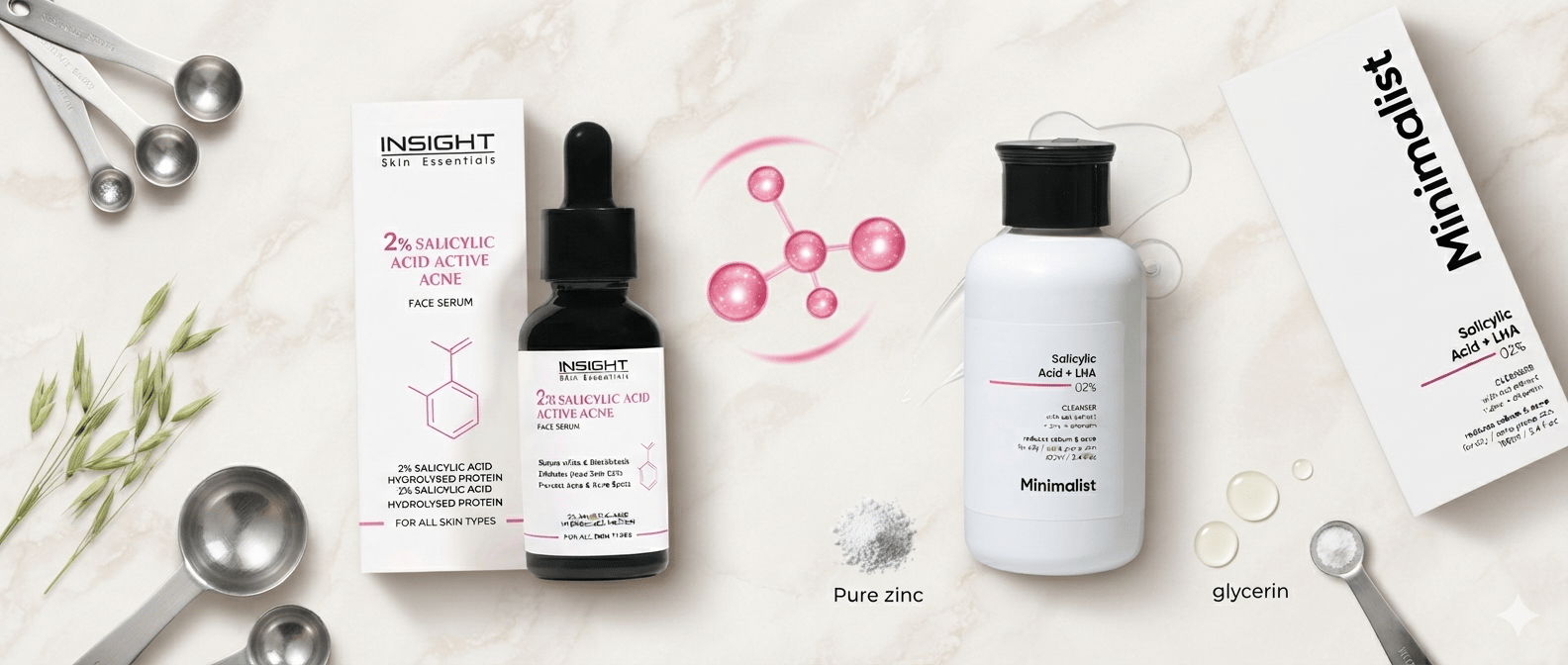
Salicylic Acid for Acne: How It Works and How to Use It Right
If you have oily, breakout-prone skin, someone has probably already told you to "just use salicylic acid". It is good advice, but it usually arrives without the instructions. Which strength? Serum, face wash or spot treatment? Every day or twice a week? Used well, salicylic acid for acne is one of the most reliable ingredients in skincare. Used carelessly, it leaves skin flaky, red and angrier than before.
This guide covers what salicylic acid actually does inside your pores, how to introduce it without irritation, and how to build a simple routine around it with products you can pick up in one order.
- What is salicylic acid?
- Why it works so well on acne and blackheads
- Serum, face wash or spot treatment: which format?
- How to start using salicylic acid, step by step
- Mistakes that cause the dreaded flaky phase
- Who should be careful with it
- A simple weekly routine to copy
What is salicylic acid?
Salicylic acid is a beta hydroxy acid, or BHA, originally derived from willow bark. The word to hold onto is oil-soluble. Unlike glycolic or lactic acid, which work on the skin's surface, salicylic acid dissolves in oil, which means it can travel down into the pore itself and clean it from the inside.
That single property explains almost everything people love about it: fewer blackheads, fewer clogged pores, less shine by mid-afternoon, and breakouts that heal faster and return less often. The American Academy of Dermatology lists salicylic acid among the most effective non-prescription ingredients for mild acne and clogged pores.
Why it works so well on acne and blackheads
Acne usually begins with a blocked pore: dead skin cells and excess sebum form a plug, bacteria multiply behind it, and the result is a blackhead, whitehead or inflamed pimple. Salicylic acid interrupts this cycle in three ways:
- It exfoliates inside the pore. The acid loosens the bonds between dead skin cells, so plugs break down and new ones form less easily.
- It regulates surface oil. Skin stays matte for longer, which oily skin types notice within the first couple of weeks.
- It calms the skin. Salicylic acid is chemically related to aspirin and carries a mild soothing effect, which is why treated breakouts often look less red.
Blackheads deserve a special mention. Because a blackhead is simply an open, oxidised pore plug, an oil-soluble acid is exactly the right tool. Scrubs rub at the surface; a BHA dissolves the plug itself.
Serum, face wash or spot treatment: which format?
- Face wash: the gentlest entry point. Short contact time means low irritation, but also milder results. Good for teens and first-timers.
- Serum: the sweet spot for most people. A leave-on serum keeps working for hours and gives visibly better results on blackheads and texture.
- Spot treatment: higher strength for individual pimples. Not for all-over use.

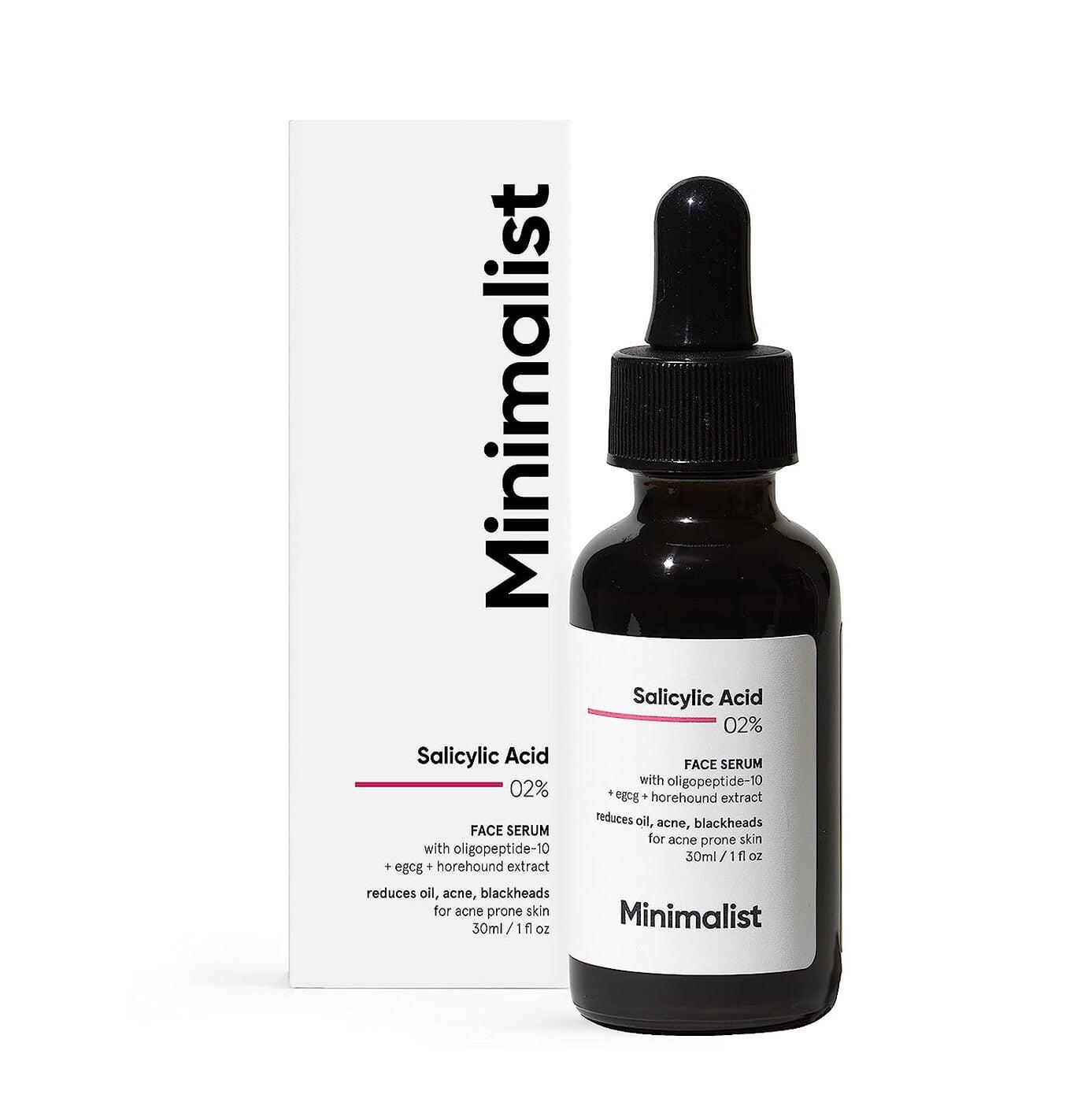
A well-formulated leave-on option for acne-prone skin. Targets excess oil, breakouts and blackheads, and layers easily under moisturiser. Find the full lineup in our Minimalist collection.
Minimalist Salicylic Acid Face Serum, available at Cosmetic LaneHow to start using salicylic acid, step by step
- Patch test first. Apply a small amount behind the ear or on the jaw for two nights. No stinging or redness means you are clear to start.
- Begin twice a week, at night. Cleanse, dry your face fully (damp skin increases penetration and irritation), then apply the serum.
- Moisturise on top. Always. A light gel moisturiser keeps the barrier happy and does not clog pores.
- Increase slowly. After two weeks, move to alternate nights. Most skin settles comfortably at three to five nights a week.
- Wear sunscreen every morning. Exfoliating acids make skin a little more sun-sensitive, and sun damage undoes everything you are working toward.
Expect the first visible changes, less shine and smoother texture, in about two weeks. Blackheads and breakouts improve meaningfully over six to eight weeks. Consistency wins.
Mistakes that cause the dreaded flaky phase
- Starting daily from day one. The most common mistake. Build up gradually.
- Stacking acids. Do not layer salicylic acid with glycolic acid, retinol or vitamin C in the same routine while starting out. Alternate nights instead.
- Skipping moisturiser. Dryness is not a sign the product is working; it is a sign your barrier needs support.
- Scrubbing as well. A BHA replaces your physical scrub. Using both is how skin ends up raw.
- Quitting at week three. The purge, a short spell where clogged pores surface faster, fades. Stopping and restarting just resets the clock.
Who should be careful with it
Very dry or eczema-prone skin usually finds salicylic acid too drying; niacinamide or azelaic acid are kinder starting points. Sensitive skin should stay at wash-off formats. If you are pregnant, most doctors consider low-strength topical salicylic acid acceptable, but check with your own doctor first. Deep, painful cystic acne needs a dermatologist rather than a serum.
A simple weekly routine to copy
- Every morning: gentle cleanser, light moisturiser, sunscreen.
- Mon, Wed, Sat nights: cleanser, salicylic acid serum, moisturiser.
- Other nights: cleanser, moisturiser, and nothing clever.
That is the entire plan. No ten-step shelf, no mixing, no guesswork. One well-chosen BHA serum, used three nights a week with sunscreen every morning, will do more for oily, congested skin than a drawer full of impulse buys.
Ready to clear things up? Shop the Minimalist Salicylic Acid Face Serum, explore the full Skincare range, or see what everyone is loving in Bestsellers. Everything is 100% genuine, delivered to your door.
Guides, edits and honest picks
Ingredient explainers, routines and hand-picked favourites from Cosmetic Lane. Browse the journal for more.
Visit the Journal